Showing posts with label Words you should know. Show all posts

Wednesday, August 19, 2015

Words you should know: Criollo*

You've heard the word in passing as folks describe cigars, tobacco plants, and/or tobacco seeds, depending on who's doing the talking. By the way, we're ignoring the people who say it just to sound smart, especially since they usually mispronounce it** and/or don't know what the word actually means.
[source]

Keep reading and you'll know all the things. (Or at least mostly all the things. Or at least some things. Or something.)

The word translates to "native seed," so when you say "criollo," some folks may think you mean actual Cuban leaf grown on Cuban soil--the actual plant.

However--there's always a however, isn't there?--Criollo also means a person of Spanish descent born in Spanish America. Know what else can mean the same thing? Creole, as in "I went to New Orleans for the International Premium Cigars and Pipe Retailers (IPCPR) convention and never met anyone of Creole descent. But I sure did have some Creole food while smoking a criollo cigar." (There's also a criollo horse, but that's a blog post for another time. Probably around never o'clock.)

[source]

We're here for tobacco, though. So think of the criollo seeds as those native to Cuba, but (literally) uprooted and planted in another region, most notably NicaraguaHonduras, and San Andres in southern Mexico.

Obviously, if you live on planet Earth, and for the sake of argument, we'll make that assumption, you know the US and Cuba have been in a tiff for quite a long time, so you can't just call Fidel and ask him to send some criollo seeds. However! When Cuban tobacco growers beat feet out of the country for points southwest (Central America), as well as north to Miami, F-L-A*** and south to the Dominican Republic (among other non-Cuban havens), with them went their livelihood and way of life: tobacco seeds.

Those original criollo seeds have changed over the years,**** especially through hybridization to eliminate blue mold, a disease known to destroy plants and crops.

Once, criollo lived only as a sun-grown plant and, as a result, spent the rest of its days within the cigar, as filler. (Poor criollo.)

Yes, grown in the actual shade. [source]
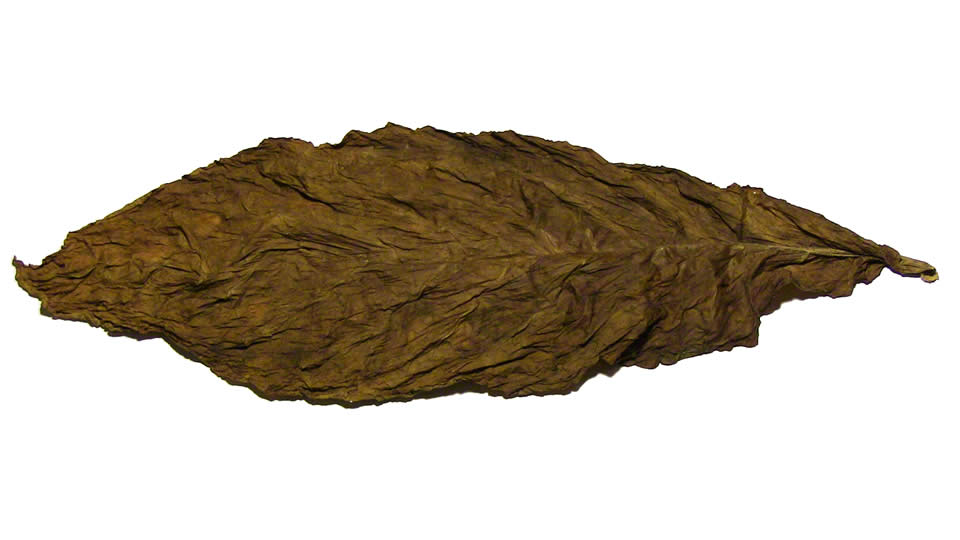
Now, however, thanks to the innovation and smarty-pantsness of tobacco growers, a shade-grown criollo emerged around the turn of the century (20th to 21st), proudly becoming a perfect first impression of the cigar--the wrapper.

We're telling you this because we care about you: Please don't say "This tastes like criollo." No. Just...no. Remember that tobacco's taste/flavor ultimately comes from the soil and regional conditions, not the seeds themselves. For example, you'll find a Jalapa, Nicaragua-grown criollo much sweeter than that from the Esteli, Nicaragua region. (You're welcome to use that fact at your next cocktail party.)

Oh! Maybe next time we see you, we'll tell you about the criollo chocolate. Yep! It's a thing!


*To paraphrase Buddy the Elf: "That's a fun word to say."

**Super awesome when Valentino says it; ask him next time you see it. In the meantime, repeat after me: cree-oh-yo.

***You're welcome for the earworm!


****Haven't we all?

Friday, June 5, 2015

Words you should know: Maduro

You see the dark wrapper and immediately think "Whoa! That's going to be a full cigar, all filled with strength and spice. I'm not ready for that strong a cigar yet."

Something's afoot! It's the Leaf by Oscar! [source]

We say, "Oh, pshaw." Turn that part of your brain off, please, and open your hearts to the maduro because this wrapper is going to surprise the crap out of you. In a (really) good way. Probably better if you're prepared for all that goodness.

 A language lesson: maduro means "mature" or "ripe" in Spanish, not "This is going to be so mother-effing strong I won't be able to handle it." Okay. Class over.

So why are the maduro cigars so so so dark?

[source]

You know how when you caramelize onions they get all dark and delicious? Same thing. Same-ish thing. Extra fermentation, baby. Alllll fermentation.

Here's how a maduro is born:

1. Really nice folks pick the someday-wrapper leaves, which are generally thicker than binder and filler leaves--and even non-maduro wrappers. Why thicker? Because thinner leaves will go "Poof!" and disintegrate during the loooooong fermentation process. That would be a waste of time and energy for the grower and the plant.

2a. Leaves snuggle together in a curing barn for up to 45 days--until their color goes from just-grown green to rich, delicious brown. You know, the opposite of what you generally want to happen with your plants at home.

2b. Want darker, sweeter, more caramelly leaves? Age them even longer--years if you like. (Cigar makers have some serious patience.)

3. Voila! Super fermented leaves with a deep, rich, flavorful profile you'd be a fool* to pass up. What kind of flavor? Well, depending on the soil and all those factors that make tobacco unique, you could be smoking the cigar equivalent of  dark chocolate, coffee, brown sugar, caramel, molasses, black pepper, dried fruit, black cherry, or other stuff the plants haven't even thought of yet! Almost all maduro wrappers are more complex than other wrappers because they worked very very hard at being delicious.

Mmmmm. (These are Fuentes, by the way.)  [source]

Let's play Cigar Smoker Word Association.
You say "maduro." Many will respond "dessert."

So beyond fermentation, what's providing the delicious sweetness?
A. Genetic make-up
B. Seed-type
C. Organic micro elements in the soil
D. All of the above.

The answer is D, so you can't possibly try this is home. (Sorry!)  And even if you get all those elements correct, tobacco variety tastes differently from one farm to the next and varies from crop to crop, depending on rainfall and  (literally) on which way the wind blows.

The mighty broadleaf. [source]

If you want the most sweetness from a maduro wrapper, seek out the broadleaf, which is genetically programmed to satisfy your sweet tooth.**

We challenge you to give the maduro wrapper a try. Actually, try a couple from different companies, but make sure one of them is a Padron '64 Anniversary series


and another is a Perdomo 20th Anniversary.

Oh crap. I could make myself crazy trying to include all the fabulous ones.

And Valentino really doesn't need me to be any crazier. I'm already at a dangerously high level.***


*

I pity the fool
that turns his nose up at maduro wrappers.


**But don't chew on it, for heaven's sake. That will land you in #cigarloungedouchebag territory.

***

Tuesday, May 19, 2015

It is literally 15:02 as I write this story about 1502. (My phone is on military time so I can't eff up the alarm.)

Waaaay back in the day ::cough Christmas cough:: the awesome Shannon Baxter, Southeast US Territory Manager for House of Emilio, sent me a gift. (Thanks Shannon!) In the fab package were a couple of these:


[source]
The Emerald and Ruby 1502 cigars, to be specific, mild and medium strength, respectively.

Valentino nom-nom-nommed those up--or whatever the cigar version of nom-nom-nom is.*


Now there's a new member of the 1502 gang! The 1502 Black Gold!

You will be (metaphorically) punched in the gut with its strength and awesomeness. From the 1502 website: "If you like strong cigars, you’ll definitely love this one...It has a double binder and long filler from Nicaragua." There's also a natural Maduro sun-grown tobacco wrapper, in case you were wondering.**

Here's a handy chart from the 1502 website about the Black Gold:***


Strength: Full Body (8/10 – 8.8-/10)
 
"Start off with Forest soil and nuts, and with wood aroma.
Light pinch of pepper or chili over a delicate chocolate sweetness.
Delicate fruit notes. Very multi-layered & complex."

Oh! And they have your favorite size! Sorry, vitola! They have all the favorite si...vitolas!****
  • Toro (6 x 50)
  • Torpedo (6 x 50 box-pressed)
  • Perfecto (6 1/8 x 50 box-pressed)
  • Conquistador (6 x 56 box-pressed)
  • Lancero (7 x 48)
  • Corona (5 1/8 x 44)
 The point of all this (and you know how I do go on...) is that there's a new article and video about the 1502 on iROBUSTO. I had something to do with one of these and nothing to do with the other.*****

 Okay then. You go check out that video and I'll go watch the Beverly Hillbillies! (Did you know that the theme of the show is actually called "The Ballad of Jed Clampett"? Now you know! Enjoy!)


*I'll come up with something. Don't you worry!

**I know you were wondering. Don't deny it!

***Yeah, yeah, "Black gold...Texas tea..." We can't get the Beverly Hillbillies theme out of our heads either. Sorry about that.

****I know! This doesn't look right. But because "vitola" is Spanish, the pluralization is simply to add an S. I want it to be more complicated than that, like Latin, but, sigh, no.

*****You're obviously smart enough to figure out which is which.

Looking for something special? Search the blog